
Introduction
Fintech-telecom convergence is a major growing trend – leading Telecom operators are unlocking significant fintech revenue by evolving from basic connectivity providers into digital ecosystem hubs. Besides wallets and mobile money, key growth areas include embedded finance, super-app marketplaces, B2B fintech-as-a-service, and telco-specific insurance (Telcoassurance). These are fuelled by proprietary subscriber data to create highly personalized financial products. Beyond them, digital trade corridors and financial inclusion represent opportunities which attract the combined power of telecom and financial services. This article is intended to offer a perspective of how MVNOs can pivot from being airtime / data / SMS / content resellers to value creators in the platform economy through fintech.
In addition to the market feasibility of specific offerings, it is important for MVNOs to factor in the regulatory regime in their geographies involving licence considerations, data privacy and other factors before embarking on strategic commitments to launching fintech products.
Overview of the Fintech Industry
The market is expected to grow from $250 billion in 2025 to over $ 1.7 trillion by 2035 (consolidated data from Lambda Finance, Mordor Intelligence, Expert Market Research and Markets & Markets). Digital payments remain the largest segment, while embedded finance, AI-driven financial services, digital lending, and digital identity are among the fastest-growing areas.
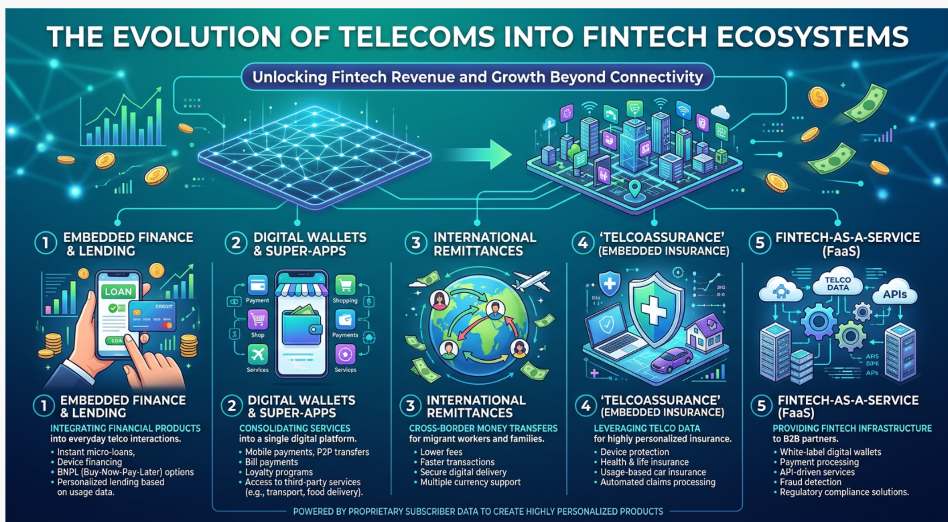
Figure 1 - Overview of Fintech areas (co-produced by author for Fintech Incubator, TM Forum, DTW June 2026)
A summarized view of the above areas is provided below:
- Embedded Finance & Lending
Micro-loans and BNPL: Utilizing real-time telecom data (recharge frequency, device usage), telcos bypass traditional credit scoring to offer instant nano-loans and Buy Now, Pay Later options.
Data Monetization: Telcos can monetize their proprietary subscriber behaviour scoring models by selling these B2B insights to third-party digital lenders (subject to specific regulatory requirements in the geography)
- Digital Wallets & Super-Apps
Payment Gateways: Transforming mobile wallets into merchant payment platforms where telcos take a percentage fee on every transaction, utility bill, and P2P transfer.
Ecosystem Bundling: Driving Average Revenue Per User (ARPU) by offering bundled subscriptions that combine standard telecom services with digital banking rewards and loyalty programs.
- International Remittances
Cross-border Transfers: Providing cheaper, faster, and more accessible remittance rails, particularly beneficial to unbanked or migrant worker segments.
- "Telcoassurance" (Embedded Insurance)
Tailored Micro-insurance: Offering device insurance, health, or travel coverage directly within the mobile app, using customer data to dynamically cross-sell and reduce overall churn.
- Fintech-as-a-Service (FaaS)
White-label Solutions: Leasing telecom billing and payment APIs to traditional financial institutions or independent fintechs wanting to reach unbanked populations.
While some of the above (e.g. wallets and payments) may already be in vogue within the MVNO sector, the scope for growth – both within the above and beyond is very attractive as shown in Figure 2.
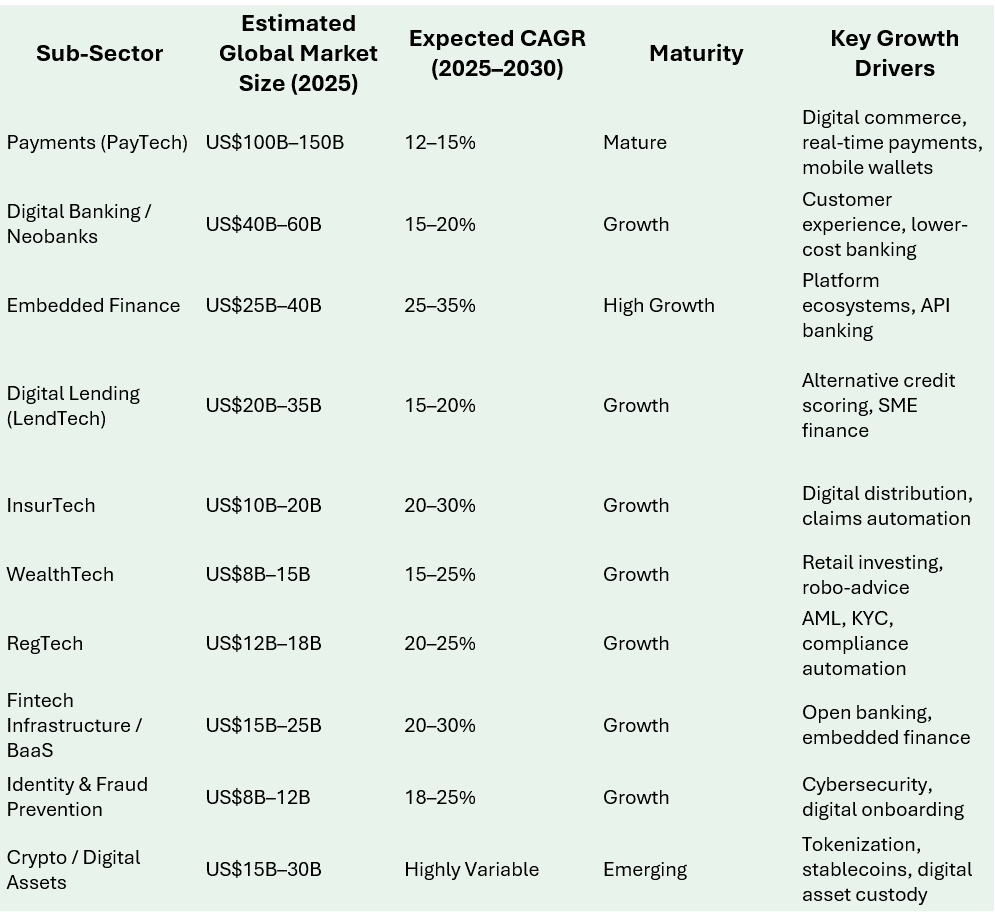
Figure 2 – Fintech sub-sector distribution (Consolidated data from Lambda Finance, Mordor Intelligence, Expert Market Research and Markets & Markets)
Fintech Capability Layers
Broadly speaking, there are eight layers of fintech capability, some of which sit deeply within the regulated product category and others which can be considered cross-industry capability. Examples of the former are core regulated products:
- Banking,
- Lending,
- Insurance,
- Payment processing
Cross-industry capabilities are those which can be leveraged by an organization from a different industry entering the fintech sector. Examples are:
- Super Apps
- APIs / Open Banking APIs
- eKYC / digital identity
- Data Lakes, Analytics, ML, AI
- AML,
- Fraud Management
Figure 3 illustrates domains in which MVNOs can actively participate and since ecosystems will be the norm for a platform economy, financial institutions can benefit from a partnership with MVNOs. Various flavours of this approach exist, with Banking MVNOs being an important part of the South African MVNO / Fintech landscape. From the scenarios below, an example has been illustrated with Embedded Finance
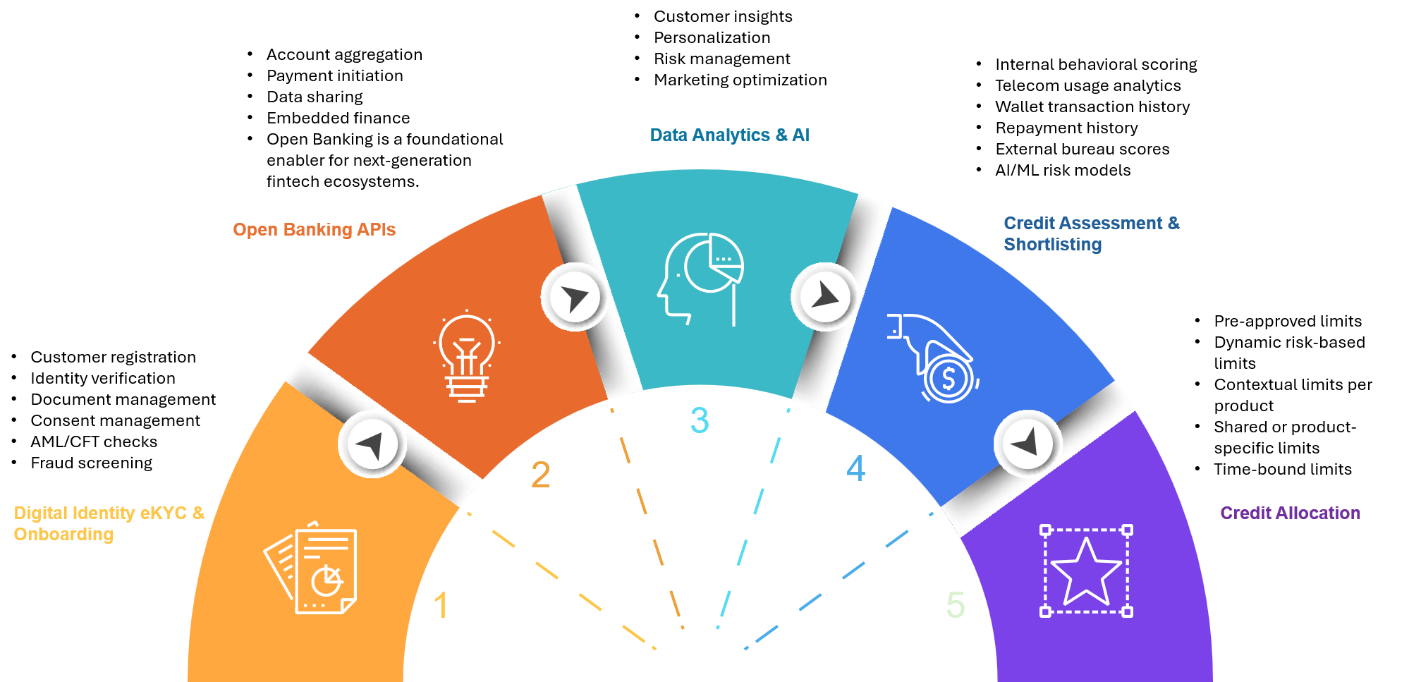
Figure 3 - Potential Scenarios for MVNOs / DSPs in Fintech
Example Sub-sector – Embedded Finance
Embedded Finance is a financial product offered by a non-financial service provider. It is integrated into the main offering of the provider rather than a bundled add-on, and it is a completely new product rather than just connecting the customer to an existing product. According to The B2B Embedded Finance Landscape (APIdeck) five products can be offered in the embedded finance model - payments, banking, lending, investment and insurance.
Of the five, payment processing is the most mature, being a capability which a service provider offers either through their wallets, payment gateway integration or both. An MVNO can bring in both wallets (to be linked to the mobile number to address the underbanked / unbanked segment) and payment gateways to provide both consumer and B2B services. In one African country, Visa has launched a corporate B2B payment platform in partnership with a bank; an MVNO could partner with a neobank or use Open Banking / PSD2 constructs to create an embedded payment value proposition to their business customers.
Embedded banking provides full banking services such as accounts, cards and relevant banking products. Strategically positioned, a trusted communications / digital service provider with the right platform can create a substantial moat for their business revenues when they acquire full-services customers for telecoms, banking and financial services. A major MNO in Africa provides both lending and payment services to both consumer and SMME segments. Another MNO has chosen to apply for a banking licence, while banks in some countries have either been running MVNOs or looking to launch their own. While payments and banking have been listed above as examples, lending, insurance and investment are high growth areas in the fintech world with nuances around digital identity & trust, alternative credit-scoring using telecom data being powerful levers to create value for MVNOs.
Conclusion
Digital transformation of every industry offers substantial opportunities for customer retention, revenue protection and growth, higher profitability of telecom services. But to get to that point, Service Providers of all hues (especially MVNOs who do not have heavy telecom infrastructure of their own) will have to create strategies around blended value propositions. In this pursuit, fintech offers the closest path to the pivot for sustainable growth.

Last blogs from Seshan Krishnamurti
View all →-
September 14, 2026
Value Creation in the Platform Economy
MVNOs need to shift from traditional Product Lifecycle Management to Continuous Value Delivery, putting customer needs at the centre of strategy. By continuously analysing value drivers,…
-
August 17, 2026
Why limit ourselves to “M”
MVNOs can go beyond mobile connectivity by becoming Converged Service Providers, combining mobile, fixed, satellite, and digital services behind a unified customer experience. This article explores…
-
May 4, 2026
The Fabric – MVNO Platform Architecture in an AI world
MVNO platform architecture is evolving rapidly in the AI era, shifting from legacy BSS/OSS systems to composable, API-driven digital platforms. By building an integrated “Fabric” that…