
Converged Service Provider - path to profitability for MVNOs
Introduction
The era of digital transformation contains multiple waves – beginning with cloud and mobility at the start a decade ago and more recently with AI & Machine Learning. In the current wave, converged connectivity services has become much more of a reality across fixed, mobile and satellite communications. Two parallel streams are accelerating this convergence - D2D / NTN which is spurring Mobile Operators globally to partner with satcom operators, and enterprise transformation which offers revenue growth opportunities. However, a key gap remains, which is an attractive opportunity for MVNOs to step in and become serious value-adding digital service providers. This key gap is about enterprise value beyond connectivity services – an MVNO can create a unique app-to-network unified experience by using three levers: an application layer to address customer, product and service; an orchestration layer combining workflow and API management; finally, an ecosystem layer to manage the highway between supply and demand of various edge solutions for enterprise segments. At the network layer, the MVNO can simply become a VNO or even better, a CSP (Converged Services Provider) or a DSP (Digital Services Provider.)
Overview of the Opportunity
Businesses are undergoing digital transformation to compete more effectively in their own sectors while being pressured to be more cost efficient, transparent and with more effective risk management. They expect their connectivity providers to support use cases such as connected vehicles, industrial IoT, smart buildings, workforce mobility, remote monitoring, asset tracking, security, edge computing and managed services.
This evolving scenario is particularly attractive because enterprises requiring such partnerships are both gateways to multi-year recurring revenue and the partnership requirements are typically more profitable compared to consumer ARPUs based on voice and data.
Potential Business Approach
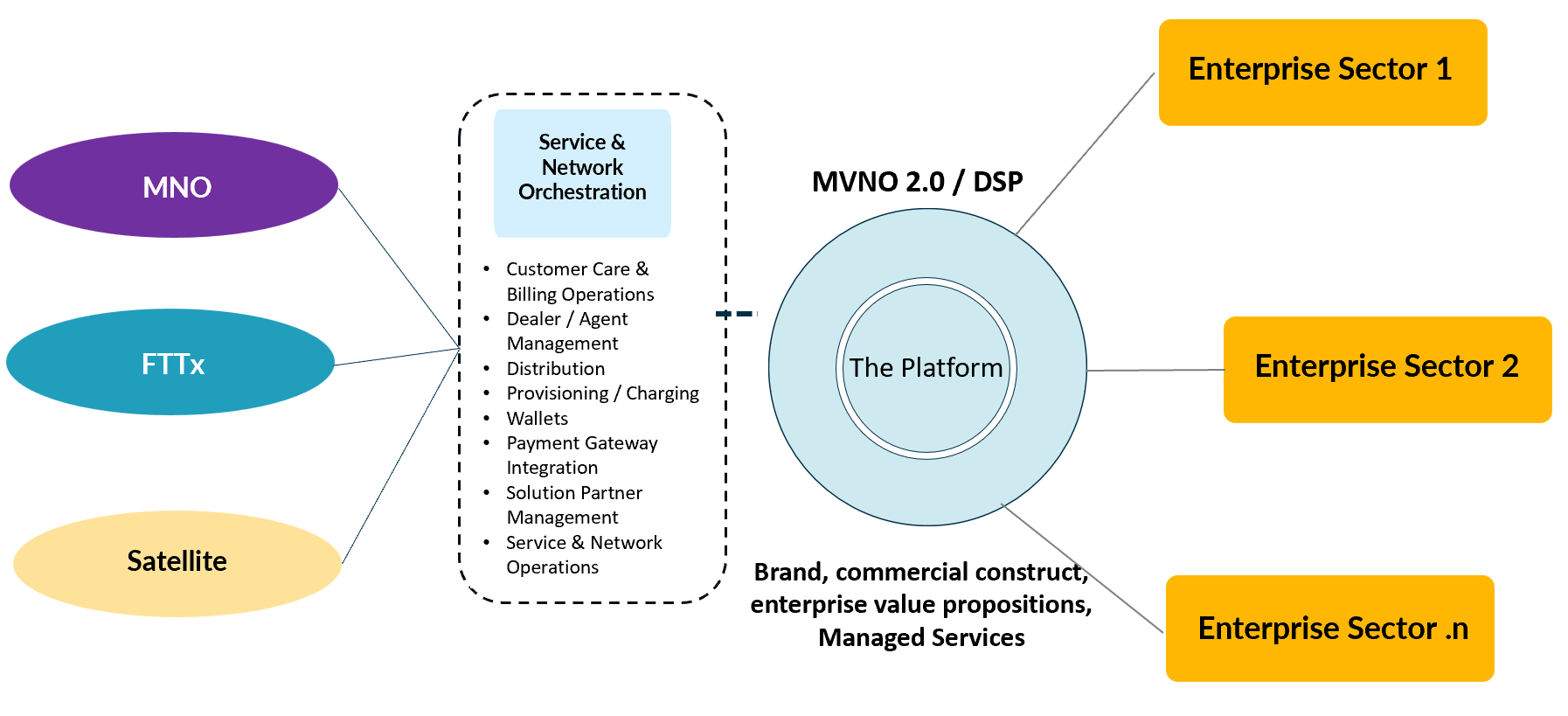
Figure 1 – Potential Business Model Approach
The principle is that the customer contracts the MVNO for an end-to-end service wherein a location could have FTTx as its primary fixed connection, 5G as backup and satellite as the primary connection for remote locations. The MVNO could offer this as a single service with one SLA and one bill.
For each of the network technology choices, the MVNO can explore different wholesale / partner models with the back-end provider. Just as with the MNO, there are choices about being a reseller, a light MVNO, and a full MVNO, in the case of FTTx and Satellite, the MVNO can explore similar choices.
As an example with an FTTx provider, three options are available:
- Simple reseller with the MVNO providing customer-facing capabilities while the FTTx operator provides the infrastructure, the ONT / CPE and support services directly
- Managed FTTx services wherein the FTTx provider simply becomes a wholesaler with relevant maintenance agreements
- Multi-operator aggregation: The MVNO's digital platform
checks availability across multiple FTTx providers and selects the appropriate provider based on:
- Coverage
- Price
- Installation time
- SLA
- Capacity
The customer sees only the MVNO’s FTTx product thought the underlying providers are different based on the variables.
For satellite, the emerging D2D / NTN services are even closer to the traditional MVNO model owing to the 3GPP standards integration - satellite connectivity can potentially be integrated into the mobile proposition rather than requiring a conventional satellite terminal. However this may change based on whether LEO, MEO or GEO services (multi-orbital connectivity) which would be a design consideration with the satellite operator.
The enterprise services opportunity to become a full-fledged DSP with multi-network orchestration is definitely more profitable and sustainable. However, the MVNO will require serious digital platform capabilities and well-negotiated wholesale agreements with three different types of network operators. They are very familiar with MNO agreements – with the others, some points to consider are provided below:
Depending on the business model, the Satellite agreement may include:
- Satellite capacity
- Ground-station access
- Gateway services
- Network access
- Terminals
- Installation
- Equipment maintenance
- Spectrum/regulatory responsibilities
- Network management
- Traffic volumes
- Geographic coverage
- Service levels
- Latency commitments
- Availability
- Data allowances
- Usage-based pricing
- Minimum commitments
- Excess usage pricing
- Customer support
- Fault management
With the FTTx operator, the following are points to consider:
- Commercial area: What needs to be agreed
- Wholesale pricing: Price per circuit/service
- Coverage: Geographic availability
- Access: FTTH, FTTB, FTTO etc.
- Bandwidth: Available speed tiers
- Installation: Installation charges and timelines
- CPE: ONT/router ownership and responsibility
- SLA: Availability, latency, repair times
- Fault management: NOC responsibilities and escalation
- Provisioning: Ordering and activation process
- APIs: Automated address qualification/order/provisioning
- Billing: Wholesale billing and reconciliation
- Service credits: Compensation for SLA failures
- Customer ownership: Who owns the end customer
- Branding: White-label/co-branded arrangements
- Termination : Customer and wholesale contract terms
Conclusion
The following trends will shape the enterprise MVNO market:
A wrapper around the network technology types which will leave the best choice of the transport for the service to the AI agent or whatever the MVNO / DSP chooses for that decision. Enterprises will buy solutions with clear value propositions – they will stop buying technology.
Managed services will become more important than raw connectivity. Customers will work with partners who are able to support business and operational outcomes – technology-enabled revenue growth, operational excellence (availability, performance, threat management, etc.) in the technology layer and ecosystem agility in technology - rather than speeds and capacity.
Industry-specific propositions will create far higher traction with clients. An MVNO which is able to focus on the core value proposition to the industry sector – logistics, healthcare, banking, etc. – will significantly outperform a generic connectivity provider of voice, data and uptime.
The opportunity is consequently much larger than the traditional MVNO market.
MVNO 2.0 is about service & technology orchestration, combining multiple networks and digital services behind a unified, simplified customer experience. For MVNOs willing to make that transition from MVNO to DSP, convergence is not merely a technological trend. It is a route to higher-value customers, broader revenue pools and stronger differentiation.
The question is no longer whether an MVNO owns the network.
The question is whether it can orchestrate the networks and services that the enterprise needs.

Last blogs from Seshan Krishnamurti
View all →-
September 14, 2026
Value Creation in the Platform Economy
MVNOs need to shift from traditional Product Lifecycle Management to Continuous Value Delivery, putting customer needs at the centre of strategy. By continuously analysing value drivers,…
-
June 29, 2026
Value Creation in the Platform Economy with Fintech
Fintech-telecom convergence is reshaping the competitive landscape for MVNOs. As the global fintech market races toward $1.7 trillion by 2035, mobile virtual network operators have a…
-
May 4, 2026
The Fabric – MVNO Platform Architecture in an AI world
MVNO platform architecture is evolving rapidly in the AI era, shifting from legacy BSS/OSS systems to composable, API-driven digital platforms. By building an integrated “Fabric” that…