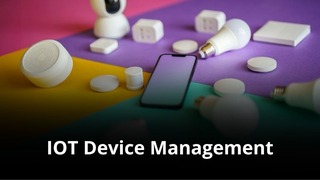
IoT Device Management
Introduction about IoT Device Management
IoT Device Management is a foundational capability for any organization operating a fleet of connected devices at scale. Whether you are running an M2M and IoT MVNO, deploying smart meters across a utilities network, or managing industrial sensors in the field, the ability to remotely provision, monitor, configure, and secure your devices is not optional — it is essential. Without a structured and automated IoT device management platform, operating even a modest fleet of a few thousand devices quickly becomes operationally unmanageable and commercially unscalable.
This page provides a comprehensive, educational overview of IoT Device Management: what it is, what it does, how it integrates with your broader OSS and BSS infrastructure, and why selecting the right device management approach is one of the most critical decisions an IoT operator or MVNO can make. Use this page as your definitive guide to understanding and acquiring the right IoT Device Management solution for your business.
What are the details of IOT Device Management?
- History and evolution of IOT Device Management?
- Core utility and functionality of IOT Device Management
- Technical Integration and Data Model
- IOT Device Management for MVNOs and IoT companies
- Organizational impact of IOT Device management
- Security in IoT Device Management
- The Impact of 5G, eSIM, and AI on IoT Device Management
- Frequently Asked Questions about IOT device Management
- Summary
History and evolution of IOT Device Management
IoT Device Management emerged in the early 2010s as enterprises began deploying cellular-connected devices beyond smartphones. The early focus was on simple remote configuration and firmware updates for M2M modems. As device volumes exploded and use cases diversified, standardized frameworks such as OMA-DM (Open Mobile Alliance Device Management) and later LwM2M (Lightweight M2M) were introduced to bring order to heterogeneous fleets. Today, cloud-native IoT Device Management platforms have replaced legacy on-premise tools, integrating seamlessly with eSIM, 5G, and AI-driven analytics to give operators full, real-time visibility and control over millions of connected endpoints.
Core utility and functionality of IOT Device Mamagement
What is IOT Device Management used for?
IoT Device Management is the set of tools, protocols, and processes that enable an operator or enterprise to maintain complete control over connected devices throughout their entire lifecycle — from initial provisioning and onboarding to end-of-life decommissioning. Its fundamental purpose is to ensure that every device in a fleet is correctly identified, securely connected, running the correct software, and operating within defined parameters at all times.
For operators building an IoT device strategy, a robust device management platform is the operational backbone that makes large-scale deployment commercially viable. Without it, tasks such as pushing a firmware update to 50,000 field-deployed sensors or remotely disabling a compromised device would require physical intervention at an impossible cost. With it, those same tasks become automated, scheduled workflows that take minutes.
The scope of IoT Device Management extends to every phase of a device's operational life. It covers the secure onboarding of new devices, the remote configuration of connectivity parameters, the scheduling and delivery of over-the-air (OTA) firmware and software updates, the continuous monitoring of device health and connectivity status, the enforcement of security policies, and the eventual deprovisioning of retired assets. For organizations managing IoT device operational items at scale, this system is indispensable.
Key functions of a IoT Device Management Platform
Understanding the core functions of an IoT Device Management platform is essential for evaluating and selecting the right solution for your organization:
Device Onboarding and Provisioning:
The platform must securely register and authenticate new devices as they join the network. This includes assigning credentials, configuring connectivity profiles, and binding the device to the correct subscription or service plan. Zero-touch provisioning — where a device connects and self-configures automatically — is a key capability that dramatically reduces deployment costs. This ties directly to SIM card and eSIM management workflows.
Remote Configuration and Parameter Management:
Operators must be able to push configuration changes to individual devices or entire groups without physical access. This includes adjusting connectivity settings, changing APN parameters, updating reporting intervals, and modifying operational thresholds. This capability is critical for managing large, geographically dispersed fleets of IoT devices.
Over-the-Air (OTA) Firmware and Software Updates:
One of the most commercially significant functions of any device management platform is the ability to deliver OTA updates securely and reliably. Bug fixes, security patches, and new feature rollouts can all be executed remotely without any physical access to the device. Robust OTA management includes delta updates (only sending changes, not full firmware images), rollback capabilities in case of a failed update, and staged rollouts to minimize risk across large fleets.
Device Health Monitoring and Diagnostics:
The platform continuously collects telemetry data from connected devices, including battery status, signal strength, CPU/memory utilization, and connectivity uptime. This real-time monitoring enables proactive fault detection before a device failure affects the end service. Diagnostic capabilities allow operators to remotely query a device for logs and status reports, reducing the need for on-site engineer visits and significantly improving the IoT device customer care experience.
Connectivity Management:
IoT Device Management platforms integrate with the underlying connectivity infrastructure to provide visibility into the connectivity status of every device. This includes the ability to activate, deactivate, and suspend SIM profiles, manage data consumption against subscribed plans, and enforce usage caps. For operators using NB-IoT, LTE-M, or 5G RedCap networks, the device management layer must be compatible with the specific network technology in use.
Device Lifecycle Management:
From initial procurement and deployment through operational life to decommissioning, the platform tracks every stage of a device's lifecycle, maintaining an accurate, auditable record of its history, configuration changes, and connectivity events. This is a critical capability for organizations with compliance requirements and for managing the total cost of ownership of their IoT fleet. You can explore more about the broader considerations around advantages and disadvantages of IoT devices to see how lifecycle management directly impacts ROI.
Fleet Management and Grouping:
Effective device management requires the ability to logically group devices by type, geography, customer, firmware version, or any other attribute. Grouping enables bulk operations — applying a configuration change or scheduling an update to an entire segment of the fleet simultaneously — and is essential for maintaining operational efficiency at scale.
Alerts and Event Management:
The platform must generate automated alerts when devices exhibit anomalous behavior — unexpected reboots, loss of connectivity, breach of operational thresholds, or security events. These alerts can be routed to operations teams or integrated with OSS and ticketing systems for automated incident response.
Security Policy Enforcement:
The platform enforces security policies at the device level, including certificate rotation, credential revocation, encrypted communications, and tamper detection. Any device that fails a security check or exhibits suspicious behavior can be automatically quarantined or deprovisioned remotely.
Technical Integration and Data Model
Integration with Other Systems
An IoT Device Management platform does not operate in isolation. It is a central integration hub that connects to virtually every other operational system in your IoT stack. Understanding these integrations is key to selecting a platform that will fit seamlessly into your existing architecture.
The platform integrates with the SIM/eSIM management system to enable synchronized lifecycle management of the connectivity credential and the device. Changes made in the device management platform — such as deprovisioning a device — trigger corresponding changes in the SIM profile. This is particularly important when using SGP.32 eSIM Remote SIM Provisioning or Multi-IMSI Connectivity solutions, where the connectivity profile itself may need to be remotely updated alongside the device configuration.
Integration with the BSS (Business Support System) ensures that device status, usage data, and lifecycle events are reflected in billing, subscription management, and customer records. When a device is activated or deprovisioned, the BSS must be informed to correctly calculate charges and update account status. Similarly, integration with the OSS (Operational Support System) enables automated fault management, where device management alerts trigger OSS workflows for incident resolution.
Integration with cloud infrastructure and data platforms enables the device management system to feed telemetry and event data into analytics pipelines, supporting use cases such as predictive maintenance, network capacity planning, and customer reporting dashboards. For organizations exploring how Artificial Intelligence can benefit their mobile brand, the device management platform is a primary source of the operational data that AI systems require to generate actionable insights.
Technical Data Model and Key Interfaces
The technical architecture of a modern IoT Device Management platform is built around several key components and industry-standard protocols:
LwM2M (Lightweight M2M): This OMNA-standardized protocol is the dominant interface for IoT device management, particularly for constrained devices using LPWAN technologies. It defines a structured data model (object/resource model) that covers device capabilities, connectivity, firmware update, and location. Selecting a platform that natively supports LwM2M ensures broad device compatibility.
API Layer: A comprehensive REST or GraphQL API layer exposes all device management functions to external systems — BSS, OSS, customer portals, and third-party applications. A well-documented, standards-compliant API is non-negotiable for any enterprise IoT deployment requiring deep integration.
MQTT and CoAP: These lightweight messaging protocols are widely used for device-to-platform communications, particularly for telemetry reporting and command delivery to resource-constrained devices.
Device Registry: The platform maintains a master database of all registered devices, storing device identity (IMEI, IMSI, device ID), current configuration, firmware version, lifecycle status, and historical event logs. This registry is the single source of truth for the entire fleet.
OTA Update Engine: The firmware distribution component manages the packaging, scheduling, delivery, and verification of OTA updates, with support for delta patching, encryption, and code signing to ensure authenticity.
IoT Device Management for MVNOs and IoT Companies
Why Invest in a Dedicated IoT Device Management Platform?
For any organization operating an IoT connectivity business, whether a full M2M and IoT MVNO, a utilities MVNO, a healthcare MVNO, or a logistics and transportation MVNO, investing in a dedicated IoT Device Management platform is not a nice-to-have; it is a commercial requirement. The scale, diversity, and unattended nature of IoT deployments make manual device management economically impossible beyond the smallest pilot projects.
A dedicated platform gives you the operational efficiency to manage tens of thousands of devices with a lean team, the security controls to protect your customers' data and your network infrastructure, and the data visibility to offer differentiated, value-added services to enterprise customers. It is also a key enabler for reducing the cost of IoT device customer care, because proactive monitoring and remote diagnostics dramatically reduce inbound support requests and expensive field service interventions.
Furthermore, for organizations wanting to differentiate their IoT proposition, the device management platform is the layer at which premium managed services are built. Customers will pay a recurring fee for a fully managed device service that includes monitoring, OTA updates, and proactive alerts, revenue that is not available to operators offering plain connectivity alone. This is a central consideration when developing your IoT device strategy.
Advantages and Disadvantages of IoT Device Management Ownership
Full Operational Control over the entire device fleet, from onboarding to decommissioning, without dependence on third-party schedules or limitations.
Scalability to manage millions of devices with automated workflows, reducing the cost per managed device as the fleet grows.
Enhanced Security Posture through centralized policy enforcement, real-time anomaly detection, and rapid remote response to security events.
Competitive Differentiation by offering enterprise customers a fully managed IoT service layer on top of base connectivity.
Data Ownership and direct access to device telemetry and event data for analytics, AI, and value-added service development.
Reduced Customer Care Costs through remote diagnostics and proactive monitoring that eliminate unnecessary site visits.
Significant Initial Investment in platform licensing, integration development, and infrastructure, which can be substantial for smaller operators.
Operational Complexity requiring skilled DevOps and IoT engineering teams to operate, maintain, and evolve the platform.
Integration Effort with existing BSS, OSS, SIM management, and network systems, which requires careful planning and experienced project management.
Ongoing Maintenance Costs for a mission-critical system that requires continuous updates to support new device types, protocols, and security standards.
Vendor Lock-in Risk if the platform does not support open standards and APIs, making future migration costly and disruptive.
Organizational Impact of IoT Device Management
Deploying an IoT Device Management platform has a broad organizational impact that extends well beyond the technical team:
Operational Impact: The operations team gains the tools to manage device fleets proactively rather than reactively. Automated alerting, remote diagnostics, and bulk update workflows transform the operations function, enabling a small team to manage a large and diverse fleet. Processes must be redesigned around the new capabilities, defining change management procedures for firmware updates, escalation paths for security events, and SLA commitments for device response times. Alignment with OSS capabilities is critical for ensuring that device events flow correctly into your incident management processes.
Financial Impact: The primary financial case for IoT Device Management investment rests on cost avoidance. Remote OTA updates eliminate expensive truck rolls for software changes. Proactive fault detection reduces unplanned downtime and the associated SLA penalties. Remote diagnostics reduce the volume of level-2 support cases. On the revenue side, the platform enables the creation and delivery of managed IoT service offerings that command premium pricing above commodity connectivity. Organizations planning their IoT financial model should model the cost savings explicitly as part of the business case.
Security Impact: IoT devices represent a significant and growing attack surface. An IoT Device Management platform is your primary tool for maintaining the security hygiene of your fleet. Certificate lifecycle management, automatic credential rotation, firmware integrity verification, and anomaly-based alerting are all capabilities that directly reduce your exposure to IoT-based attacks, which are among the fastest-growing categories of cybersecurity threats. The ability to instantly remotely quarantine or wipe a compromised device is an essential incident response capability. Security considerations are also explored in detail on the advantages and disadvantages of IoT devices page.
Technical Impact: The platform must be deployed in a highly available, cloud-native architecture capable of handling the message volumes generated by large device fleets. Integration with the SIM management layer, particularly when using eSIM or iSIM technologies, must be carefully engineered to maintain synchronization between device and connectivity credential state. The technical architecture should be designed for horizontal scalability, ensuring that fleet growth does not require platform re-architecture.
Security in IoT Device Management
Security deserves dedicated attention in the context of IoT Device Management because IoT deployments present a fundamentally different threat landscape compared to consumer mobile services. Devices are often deployed in physically accessible locations, run for years without human intervention, and collectively represent an extremely attractive target for threat actors seeking to compromise infrastructure or gain access to enterprise networks.
A robust IoT Device Management platform must enforce security at every layer of the device lifecycle. During onboarding, each device must be authenticated using a strong, unique credential, typically an X.509 certificate or pre-shared key provisioned at manufacture. The platform must enforce mutual TLS (mTLS) for all device-to-platform communications, ensuring that neither the device nor the platform can be impersonated.
In operation, the platform must continuously monitor for security anomalies: unexpected reboots, abnormal data volumes, connections to unauthorized endpoints, and failed authentication attempts. When anomalies are detected, automated response workflows must be able to immediately isolate the affected device. Firmware integrity must be verified using code signing, ensuring that only authorized software can be installed on managed devices.
Certificate and credential rotation must be automated and performed on a defined schedule, preventing the use of long-lived static credentials that are a common source of IoT breaches. The platform must maintain a complete audit trail of all security events, configuration changes, and lifecycle transitions, a requirement for compliance in regulated industries such as healthcare, utilities, and financial services.
The Impact of 5G, eSIM, and AI on IoT Device Management
5G and Evolved Connectivity
The rollout of 5G and specifically technologies like 5G RedCap (Reduced Capability) introduces new possibilities and new demands for IoT Device Management. 5G network slicing enables operators to provide dedicated, guaranteed connectivity for critical IoT applications, but managing devices within a network slice requires the device management platform to be aware of and integrated with the 5G core's slice management capabilities. Higher data rates also make richer telemetry collection and faster OTA update delivery practical at scale.
eSIM and Remote SIM Provisioning
The widespread adoption of eSIM and iSIM technologies, particularly with the introduction of SGP.32 for IoT remote SIM provisioning, creates a powerful opportunity for operators who can integrate their device management and SIM management platforms. When a device's connectivity profile can be updated over the air in coordination with device configuration changes, operators gain the ability to switch network operators, update connectivity plans, and optimize coverage without any physical access to the device. This is a transformative capability for global IoT deployments requiring Multi-IMSI Connectivity across multiple markets.
Artificial Intelligence and Predictive Management
AI and machine learning are increasingly being embedded into IoT Device Management platforms to move from reactive to predictive operations. By analyzing historical telemetry patterns, AI models can predict device failures before they occur, allowing proactive maintenance scheduling. AI can also optimize OTA update scheduling, determining the safest time to push updates based on device usage patterns and network conditions, and can automatically identify and cluster devices exhibiting similar behavioral anomalies. For organizations already exploring how AI can benefit their mobile brand, the IoT device management platform represents one of the richest and most actionable data sources available.
Frequently Asked Questions about IOT Device Management
What is the difference between IoT Device Management and SIM management?
SIM management focuses on the lifecycle of the connectivity credential (SIM/eSIM) and its associated data plan. IoT Device Management encompasses the full device lifecycle, including firmware, configuration, security, and health monitoring. The two systems are complementary and should be integrated. Explore SIM and eSIM for more detail on the connectivity credential layer.
Which protocol is most commonly used for IoT device management?
LwM2M (Lightweight M2M) is the most widely adopted standard protocol for cellular IoT device management, particularly for constrained devices on LPWAN networks. MQTT is widely used for telemetry data transport.
Can IoT Device Management work across multiple network technologies?
Is IoT Device Management relevant for small IoT deployments?
A cloud-based, subscription-priced IoT Device Management platform is accessible and cost-effective even for smaller deployments. The security and operational benefits justify the investment at virtually any scale.
How does IoT Device Management integrate with a BSS?
Through API integration, device activation, deprovisioning, and usage events generated by the device management platform are automatically reflected in the BSS for billing, subscription management, and customer reporting.
What is OTA update management?
Over-the-Air (OTA) update management is the capability to remotely deliver firmware and software updates to devices in the field without physical access, using encrypted, signed update packages delivered over the cellular or other connectivity network.
How does eSIM impact device management?
When combined with SGP.32 eSIM remote provisioning, device management and connectivity management can be fully coordinated remotely, eliminating the need to physically replace SIM cards to change network operators or service plans.
Summary
IoT Device Management is the operational and commercial backbone of any scalable IoT connectivity business. For M2M and IoT MVNOs, IoT-focused enterprises, and operators in verticals such as utilities, healthcare, and logistics, it is the system that makes large-scale device deployment operationally and financially viable. It provides the automated onboarding, remote configuration, OTA update delivery, continuous health monitoring, security enforcement, and lifecycle tracking capabilities that are impossible to replicate with manual processes at scale.
Selecting and deploying the right IoT Device Management platform requires a structured approach: aligning the platform capabilities with your IoT device strategy, ensuring deep integration with your BSS, OSS, and SIM management systems, and designing for security from day one. The investment delivers tangible returns through reduced operational costs, lower customer care expenditure, and the ability to build and monetize premium managed IoT services that extend well beyond base connectivity.
As 5G, eSIM, and AI reshape the IoT landscape, the IoT Device Management platform will continue to grow in strategic importance, becoming increasingly the layer at which competitive differentiation is won or lost. Organizations that invest in this capability today position themselves to capture the most valuable segments of the rapidly growing IoT market. Explore the solution providers on MVNO Index to find the right IoT Device Management partner for your business.
IOT Devices