Mobile Wallet (Mobile Money)
Introduction about Mobile Money (Mobile Wallet)
Mobile Money, widely referred to as Mobile Wallet in the African context, is one of the most transformative financial technologies to emerge from the continent in the past two decades. It enables individuals to store, send, receive, and manage money directly from a basic mobile phone, without the need for a traditional bank account. For millions of people across sub-Saharan Africa, Mobile Money is not a convenience, it is the primary financial infrastructure underpinning daily economic life. Understanding how Mobile Money works, how it is architected, and how it connects to the broader telecom ecosystem is essential for any MVNO, MVNE, or Mobile Network Operator (MNO) that is operating or planning to operate in African markets.
This page provides a thorough, educational overview of Mobile Money as deployed across Africa: its history, architecture, technical integration, business implications, regulatory environment, and future outlook.
Mobile Money: key takeaways
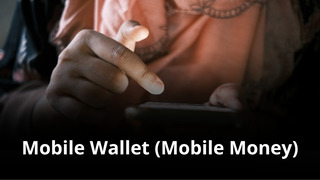
Mobile Money, also called a mobile wallet, is a financial service delivered entirely over the mobile network, letting subscribers store, send and receive money using a basic handset and a registered SIM card.
- What is Mobile Money? A financial service delivered over the mobile network that lets subscribers transact with nothing more than a basic handset and a registered SIM, replacing rather than supplementing a bank account for many users.
- How does Mobile Money generate revenue for an MVNO? Through transaction fees, typically 1 to 3 percent of transaction value, across transfers, bill payments, airtime top ups, merchant payments and remittances.
- Why does Mobile Money matter in African markets? Pioneered by M-Pesa in Kenya in 2007, it spread fast where banking penetration was low and mobile adoption high. Sub-Saharan Africa now holds over half of all Mobile Money accounts worldwide.
- What does running a Mobile Money platform require? A separate payment service provider or e-money issuer licence, a tiered KYC model, an agent network and 24/7 operations, plus integration with HLR/HSS, SMSC, OCS and BSS.
Watch: Mobile Money explained, from M-Pesa and USSD to transaction fee revenue and what it takes for an MVNO to run its own wallet (2 min 16 s).
- History and Evolution of Mobile Money?
- Core Utility and Functionality of Mobile Money
- What is Mobile Money used for?
- Key functions of Mobile Money
- Technical integration and data model
- Integration with other systems
- Technical data model and key interfaces
- Mobile Money Ownership for MVNOs and Fintech Companies
- Why Deploy a Mobile Money Platform?
- Advantages and Disadvantages of Mobile Money
- Organizational impact of Mobile Money deployment
- Regulatory and Compliance Considerations
- The Role of Mobile Money in Financial Inclusion
- Impact of Technology Evolution on Mobile Money
- Frequently Asked Questions about Mobile Money
- Summary
History and evolution of Mobile Money
Mobile Money in Africa was pioneered in Kenya in 2007 when Safaricom launched M-Pesa, a service that allowed subscribers to transfer money via SMS using their SIM card. The concept rapidly spread across East Africa, then West and Central Africa, driven by the continent's low banking penetration and high mobile phone adoption rates. Within a decade, Mobile Money had become the dominant financial access channel for hundreds of millions of people. Today it underpins commerce, agriculture, healthcare payments, government disbursements, and international remittances across more than 40 African countries.
Core utility and functionality of Mobile Money
What is Mobile Money used for?
Mobile Money is a financial service delivered entirely over a mobile network, allowing subscribers to perform a wide range of financial transactions using nothing more than a basic handset and a registered SIM card. It operates independently of traditional banking infrastructure, though it may connect to banks as partner institutions for cash-in/cash-out and interest-bearing savings products.
The primary use cases in the African context include peer-to-peer (P2P) money transfers, bill payments, airtime top-ups, merchant payments at point of sale, salary and government benefit disbursements, micro-loan disbursements and repayments, international remittances, and savings products. It is important to understand that Mobile Money replaces, rather than supplements, the bank account for a very large portion of the African subscriber base. For an MVNO or Fintech MVNO looking to enter African markets, launching a Mobile Money service is not merely a value-added product; it is frequently the central commercial proposition that drives SIM acquisition and subscriber retention.
Mobile Money services typically operate via three channels. The first is USSD (Unstructured Supplementary Service Data), which works on every mobile handset including the most basic feature phones and requires no internet connection. The second is a dedicated smartphone application for subscribers with data-capable handsets. The third is an SMS-based interface for lightweight transaction notifications and authentication. This multi-channel approach is critical in markets where smartphone penetration remains below 50% in rural areas, making the USSD channel the backbone of transaction volume.
Key functions of a Mobile Money platform
Understanding the core functions of a Mobile Money platform is essential for any operator evaluating whether to build, buy, or partner for this capability:
Electronic Wallet Management: The platform creates and manages a digital wallet for each registered subscriber, linked to their MSISDN (mobile number). The wallet holds an electronic float balance that is fully backed by real money held in a pooled trust account at a licensed partner bank. Every wallet transaction is instantly reflected in the subscriber's balance.
Cash-In and Cash-Out (CICO): Subscribers convert physical cash into electronic float at a network of registered agents (small shops, kiosks, post offices). This agent network is the operational backbone of any Mobile Money service. Without a dense, reliable agent network, a Mobile Money service cannot reach scale. Cash-out works in the reverse direction, allowing subscribers to withdraw physical cash from their wallet balance at any agent.
Peer-to-Peer (P2P) Transfers: The most used function across Africa. A subscriber enters the recipient's mobile number and the amount, authenticates with a PIN, and the funds are transferred instantly to the recipient's wallet. This replaces the informal, insecure practice of sending cash via bus drivers or couriers, which was historically the only option for rural-to-urban remittances.
Merchant Payments (P2B): Subscribers pay businesses directly from their wallet. In markets like Kenya, Tanzania, Ghana, and Senegal, Mobile Money merchant payment acceptance has become the standard at markets, supermarkets, pharmacies, and fuel stations. This function is increasingly important for Discount MVNOs that want to offer bundled airtime and data purchasing directly from the Mobile Money wallet.
Bill Payments: Water, electricity, school fees, insurance premiums, and government service fees are paid directly from the Mobile Money wallet. This is a particularly high-value function for operators because it drives daily active usage and increases subscriber stickiness.
Airtime and Data Bundle Purchase: In markets where Mobile Money is deployed by or integrated with an MVNO or MNO, subscribers purchase airtime and data bundles directly from their wallet. This creates a closed-loop ecosystem that is commercially very attractive for the operator.
International Remittances: Cross-border Mobile Money transfers are growing rapidly, particularly in corridors like Kenya to Uganda, Senegal to Ivory Coast, and Nigeria to Ghana. These corridors typically involve interoperability agreements between national Mobile Money platforms and are increasingly connected to global remittance networks.
Savings and Credit Products: Advanced Mobile Money platforms offer interest-bearing savings accounts (often called "lock savings") and mobile-disbursed micro-credit. These products are typically offered in partnership with licensed microfinance institutions or banks and represent the next layer of financial services on top of the basic wallet.
Bulk Payments and Disbursements: Governments, NGOs, agricultural cooperatives, and employers use Mobile Money platforms to disburse wages, social grants, and agricultural payments directly to beneficiaries' wallets. This is the fastest growing segment in many West African markets.
QR Code and NFC Payments: In urban markets with higher smartphone penetration, QR-based merchant payments are growing rapidly, enabling a fully contactless transaction experience.
Technical integration and data model
Integration with other systems
A Mobile Money platform does not operate in isolation. It sits at the intersection of the telecom network and the financial system, requiring tight integration with multiple systems on both sides. On the telecom side, the platform must integrate with the Home Location Register (HLR) or Home Subscriber Server (HSS) to validate subscriber identity and SIM status in real time before authorizing any transaction. It also integrates with the Online Charging System (OCS) to deduct airtime purchased via the wallet, and with the Short Message Service Center (SMSC) for transaction notifications and USSD session management.
On the financial side, the Mobile Money platform connects to the trust account management system at the partner bank, to national payment switches (such as the Ghana Interbank Payment and Settlement System or Tanzania's TIPS), and to international remittance hubs. Integration with the BSS (Business Support System) of the MVNO or MNO is also essential for unified subscriber management and customer care.
The Policy and Charging Rules Function (PCRF) plays a role in zero-rating Mobile Money USSD sessions, which is a common commercial practice in African markets where operators do not charge subscribers airtime for Mobile Money USSD menus, ensuring that balance or transaction costs never prevent a subscriber from accessing financial services.
Technical infrastructure and key interface
The Mobile Money platform is built around a core ledger system that maintains real-time account balances for every registered wallet, every agent, and every merchant. The key interfaces and data structures include:
Fraud and Risk Management Engine: A real-time transaction monitoring system that screens every transaction against configurable fraud rules. Common fraud patterns in Mobile Money include SIM swap fraud (where a fraudster takes control of a subscriber's number to drain the wallet), account takeover via social engineering, and agent-level fraud.
USSD Gateway Interface: The platform exposes a USSD menu tree through a USSD gateway, which interfaces with the mobile network's Signaling Transfer Point (STP) or USSD gateway node. Each USSD session creates a real-time interactive session between the subscriber's handset and the Mobile Money application server.
API Layer: Modern Mobile Money platforms expose a REST API layer that enables third-party integration. Merchants, fintechs, e-commerce platforms, and government agencies connect to the Mobile Money system via this API to initiate collections, disbursements, and payment status queries. This API layer is increasingly standardized through frameworks like the GSMA Mobile Money API specification.
Agent Management System: A dedicated module for registering, authenticating, and monitoring the agent network. This system tracks each agent's float balance (the electronic money they hold for cash-in/cash-out operations), generates commission statements, and monitors agent activity for fraud signals.
Wallet Ledger: A double-entry accounting ledger that records every debit and credit against every wallet in real time. Regulatory requirements in most African markets mandate that this ledger be fully reconcilable against the pooled trust account balance held at the partner bank at all times.
Regulatory Reporting Module: Generates automated reports required by the national financial regulator, including transaction volumes, trust account reconciliation reports, anti-money laundering (AML) transaction screening results, and Know Your Customer (KYC) compliance records.
Mobile Money ownership for MVNOs and fintech companies
Why deploy a Mobile Money platform?
For a Fintech MVNO or any operator targeting the African market, deploying a Mobile Money platform is the single highest-impact strategic decision available. In markets where 60% to 80% of the adult population is unbanked or underbanked, Mobile Money is not a product feature: it is the reason subscribers choose one operator over another. Operators that own and operate their Mobile Money platform retain 100% of the transaction revenue (typically 1% to 3% of transaction value per transfer), control the agent network economics, and own the customer relationship end to end.
Owning the platform also enables the operator to build proprietary financial products such as mobile savings, micro-insurance, and airtime lending, which generate interest income and deepen subscriber engagement far beyond what voice and data alone can achieve. For operators considering how to structure their African MVNO or mobile brand, integrating Mobile Money capability from launch is a far more effective growth strategy than adding it later. Explore the different types of MVNOs and MVNO business models on MVNO Index to understand where Mobile Money fits within your broader commercial proposition.
Advantages & Disadvantages of Mobile Money onwership
Revenue Diversification: Mobile Money generates transaction fee income that is structurally different from and less price-sensitive than voice and data revenue.
Subscriber Retention: Subscribers with an active Mobile Money wallet churn at dramatically lower rates than voice-only subscribers because switching operators means losing access to their financial history and agent relationships.
Ecosystem Lock-in: An operator-owned Mobile Money platform creates a closed ecosystem where airtime, data, and financial services are all purchased and consumed within the same platform.
Data Asset: Mobile Money transaction data is among the most valuable financial behavioral data available. It enables the operator to offer targeted micro-credit and insurance products with a far better risk profile than traditional credit scoring models.
Agent Network as Distribution: The Mobile Money agent network doubles as a physical distribution channel for SIM cards, device financing, and other operator products.
Financial Inclusion Mandate: Regulators in many African markets actively support operators that deploy Mobile Money, offering prefered spectrum and licensing terms in exchange for financial inclusion commitments.
Regulatory Complexity: Operating a Mobile Money service requires a separate payment service provider (PSP) or e-money issuer (EMI) license in most African markets, in addition to the telecom license. Regulatory compliance is ongoing and demanding.
Agent Network Investment: Building a dense, reliable cash-in/cash-out agent network requires substantial operational investment in agent recruitment, training, float management, and fraud monitoring.
High Platform Investment: A production-grade Mobile Money platform with real-time ledger, fraud monitoring, regulatory reporting, and API integration capabilities represents a significant capital expenditure.
Interoperability Requirements: Many African markets now mandate Mobile Money interoperability between operators, which requires additional technical integration and commercial negotiation.
Fraud Risk: Mobile Money fraud, particularly SIM swap fraud and agent fraud, is a persistent operational risk that requires continuous investment in fraud detection and prevention systems.
Organizational impact of Mobile Money deployment
Deploying a Mobile Money platform has profound organizational implications that go well beyond the technology team.
Operational Impact: The operator must recruit and manage a completely new operational function: the agent network. This requires field agents, agent relationship managers, float liquidity managers, and a dedicated agent support helpdesk. Mobile Money operations run 24 hours a day, seven days a week, including public holidays, because subscribers depend on it for essential payments. The customer care function must be upskilled to handle Mobile Money disputes, which are financially sensitive and time-critical in a way that voice complaints are not.
Financial Impact: Mobile Money generates revenue through transaction fees, float interest income (interest earned on the pooled trust account balance), and merchant service fees. The trust account management function must be fully integrated with the finance department to ensure continuous reconciliation between the wallet ledger and the bank balance. For operators with a large active user base, the float balance in the trust account can be substantial, making float interest income a meaningful revenue line.
Security Impact: Mobile Money fraud is a direct financial loss to the operator, the subscriber, or both. The operator must invest in a real-time fraud management system, SIM swap controls at the HLR or HSS level, and strong KYC procedures at agent registration and subscriber onboarding. Data protection and anti-money laundering compliance are non-negotiable regulatory requirements in every African market.
Technical Impact: The Mobile Money platform must be architected for high availability and low latency. A USSD transaction must complete within the USSD session timeout window (typically 180 seconds, but subscribers expect sub-10-second response times). The ledger must process thousands of concurrent transactions without data integrity errors. Integration with the telecom BSS and OSS systems must be seamless to deliver a unified subscriber experience.
Regulatory and compliance considerations
The regulatory environment for Mobile Money in Africa is one of the most important factors in determining whether a deployment succeeds or fails. Most African regulators require operators to obtain a dedicated payment service or electronic money license, separate from the telecommunications license. This license comes with ongoing obligations including minimum capital requirements, trust account ring-fencing, transaction reporting, AML/CFT (Anti-Money Laundering and Counter-Terrorism Financing) compliance, and mandatory KYC for all registered subscribers.

Know Your Customer KYC in Mobile Money is tiered in most markets. A basic wallet (tier 1) can be opened with just a national ID number or mobile number, with a low transaction limit. Higher tiers unlock larger transaction limits in exchange for verified identity documents. This tiered KYC model is specifically designed to balance financial inclusion (making it easy to onboard unbanked subscribers) with regulatory compliance.
Interoperability regulation is increasingly common across Africa. Ghana, Tanzania, Rwanda, and several West African Economic and Monetary Union (UEMOA) markets have already mandated Mobile Money interoperability, requiring all licensed Mobile Money operators to accept transfers from subscribers on competing networks. For MVNO operators entering these markets, interoperability is both a regulatory obligation and a commercial opportunity to reach a much larger potential transaction network from day one.
The role of Mobile Money in financial inclusion
Mobile Money is the primary financial inclusion tool in Africa and represents one of the most compelling arguments for building a Fintech MVNO or Mobile Money-enabled mobile brand on the continent. The World Bank estimates that Sub-Saharan Africa accounts for more than half of all Mobile Money accounts globally, with active account growth consistently outpacing every other region.
For an ethnic MVNO or community-focused mobile brand serving diaspora or rural populations, Mobile Money unlocks the ability to deliver remittances, payroll, and government benefit payments at a fraction of the cost and time of traditional banking channels. Agricultural smallholders in rural Kenya, Tanzania, or Ivory Coast receive fertilizer subsidies, crop payments, and micro-insurance payouts directly to their Mobile Money wallet, entirely bypassing the need for a bank branch. This is not a theoretical use case: it is already the dominant payment channel for these transactions in dozens of markets.
For discount MVNOs that target price-sensitive segments, integrating Mobile Money as a payment channel for airtime and data dramatically reduces distribution costs compared to physical scratch card networks, while simultaneously increasing subscriber engagement and data on purchasing behavior.
Impact of technology rvolution on Mobile Money
The USSD to App transition
Mobile Money in Africa was built on USSD and SMS infrastructure, specifically because these technologies work on every mobile handset across every generation of network. As smartphone penetration rises and mobile data networks expand, more Mobile Money transactions are migrating to smartphone apps, which offer richer interfaces, biometric authentication, QR code payments, and integration with e-commerce platforms.
This transition does not eliminate USSD: it adds a higher-value channel on top of it. The most successful Mobile Money platforms in Africa operate both channels simultaneously, using the app to attract urban smartphone users with advanced features while maintaining USSD as the universal access channel for rural and feature-phone subscribers.
4G, 5G and the future of Mobile Money
The expansion of 4G LTE and the gradual rollout of 5G across African markets is accelerating the shift toward app-based Mobile Money, enabling richer features such as real-time video KYC, biometric authentication, and instant merchant QR code onboarding. The Online Charging System (OCS) and Policy and Charging Rules Function (PCRF) become increasingly important as operators need to zero-rate Mobile Money app data usage and manage the integration between data session charging and financial transaction charging within a unified platform.
The integration of Mobile Money with IoT devices is an emerging frontier. Smart meters for electricity and water in African cities are increasingly connected via Mobile Money platforms for prepaid billing, eliminating the need for physical payment points and dramatically reducing collection costs for utilities.
Frequently Asked Questions about Mobile Money
What is Mobile Money in the African context?
Mobile Money (also called Mobile Wallet) in Africa is a financial service that allows subscribers to store, send, and receive money using a basic mobile phone and a registered SIM card, without requiring a bank account.
How does a subscriber register for Mobile Money?
Registration is done at a licensed agent point (a shop or kiosk) or via USSD or app self-registration. The subscriber provides identity information according to the market's KYC tier requirements and receives a wallet linked to their mobile number.
What is a Mobile Money agent?
An agent is a registered third party (typically a small business) that provides cash-in and cash-out services, allowing subscribers to convert physical cash to electronic float and back. The agent earns a commission on each transaction.
How does Mobile Money make money for an MVNO or MNO?
Revenue comes primarily from transaction fees charged to the sender on P2P transfers and bill payments, merchant service fees on point-of-sale payments, interest income on the pooled trust account float, and commissions on international remittance flows.
What is the difference between Mobile Money and a bank account?
A Mobile Money wallet is an electronic money account, not a bank deposit account. It is typically not insured by national deposit guarantee schemes (though trust account ring-fencing provides strong protection), and it does not earn interest in basic form. However, for subscribers without bank access, it performs all the essential daily banking functions.
Do I need a separate license to offer Mobile Money as an MVNO?
Yes. In virtually all African markets, a dedicated payment service provider or electronic money issuer license is required in addition to the telecoms license. Licensing requirements, capital thresholds, and ongoing compliance obligations vary by country.
How does Mobile Money connect to the telecom core network?
Summary
Mobile Money is the defining financial infrastructure of Africa's digital economy and one of the most compelling commercial propositions available to any MVNO, MVNE, or mobile brand operator on the continent. Deployed correctly, it transforms a voice and data operator into a fully integrated financial services provider, dramatically increasing revenue per subscriber, reducing churn, and creating a defensible competitive position through the combination of the agent network, subscriber financial history, and transaction data assets.
Acquiring and operating a Mobile Money platform requires investment in a specialized technology stack, a licensed agent network, regulatory compliance infrastructure, and a dedicated financial operations function. The rewards for operators that make this investment successfully are substantial: the world's fastest-growing Mobile Money markets are in Africa, and the combination of rising smartphone adoption, expanding 4G coverage, and growing merchant acceptance is accelerating transaction volumes year on year.
For operators building or expanding their presence in African markets, Mobile Money is not optional, it is the foundation. Explore MVNO solution providers on MVNO Index to find platforms and partners that can support your Mobile Money deployment, and review the Fintech MVNO business model for a comprehensive overview of how financial services and mobile connectivity combine to create one of the most powerful business models in emerging markets today.
Value Added Services (VAS)