
In this article we'll cover the following launch and growth hacking activities:
- Break the price anchor
- Own a community the incumbents overlook
- Build for the market you're actually in
- Make the product the marketing
- Weird and wonderful – the growth hacks that shouldn't have worked
- Tried and true – the basic levers
Introduction
In our last article we looked at loyalty – the activities that keep customers once you've won them. But you can't retain a base you haven't built, and for most MVNOs the first 12 to 24 months decide whether you ever get to a base worth retaining.
The launches that scale fastest rarely have the biggest budgets. 2degrees had a fraction of its rivals' marketing spend. giffgaff told its members it couldn't afford big advertising. What they had instead was one sharp idea about where the market was weak, and the nerve to make it the whole story.
In this blog we've pulled together the launch campaigns from some of the most-innovative telco launches – 2degrees in New Zealand, Lebara in the UK and now Nigeria, and Circles.Life in Singapore – plus a handful of weird and wonderful ideas from around the world. Not all of them will suit your market or your wholesale deal, but every one of them is worth learning from.
Break the price anchor
Every market has a number that customers have quietly accepted as 'just what mobile costs'. The fastest launches we've noticed pick that number and halve it – loudly.
- Halve the headline – in August 2009 2degrees arrived in a New Zealand duopoly where prepay calls cost 89c a minute and texts 20c. It launched at 44c and 9c, to any network, with no contract. The lesson isn't 'be cheap', it's 'pick one number everyone already knows, and make it the story'. Customers didn't need a rate card explained – they needed one figure to compare. In the first six months around 53,000 customers ported their number across, and GSMA Intelligence reported 2degrees took roughly half of all net additions in Q4 2009.
- Build the queue before the price – 50,000 people had registered interest before 2degrees had even announced its rates, and its website fell over on pricing day. A pre-registration list does three jobs at once: it proves demand to your board and your MNO, it gives you a day-one CRM audience, and it turns launch day into an event people are waiting for.
- Pick a fight on your customer's behalf – the creative (TBWA, fronted by comedian Rhys Darby) declared war on unfairness rather than listing features. Fifteen years later 'Fighting for Fair' is still the brand platform. A challenger with a fraction of the incumbents' budget can't outspend them, but it can be the only brand with an enemy worth cheering against.
- Make the incumbents' response part of your story – Vodafone cut its prepay prices within a year to match. That's not a loss, it's proof. 2degrees has told the story for years that prices halved overnight 'even if you weren't a 2degrees customer'. If your launch forces a competitor reaction, put it in your PR.
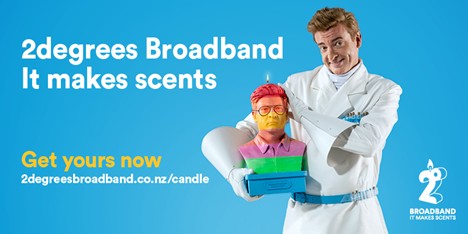
Also see the original TV ad on YouTube as 'NZ TV Commercial – 2 Degrees – Rhys Darby (2009)'.
Own a community the incumbents overlook
Lebara didn't try to win 'the UK mobile market'. It won one community the big networks were treating as an afterthought – and became the default brand within it.
- Start with a segment you can size on a napkin - Lebara launched in the UK on Vodafone's network in late 2007 targeting migrant and international communities. It estimated the UK international calling segment at around five million people, and signed 600,000 prepay customers in just over a year – roughly 12% of that addressable market. A tightly defined segment makes your TAM story believable and your marketing cheap, because you know exactly where to find people.
- Go where your customer already shops – Lebara's first product was international calling cards sold through independent phone shops, so it launched with a distribution network already in its pocket. SIMs and top-ups were sold through outlets used by the communities it served, then scaled to more than 95,000 UK retail points including an exclusive Martin McColl newsagent partnership. Lebara's own marketing team said the right distribution strategy was vital to MVNO success. For a prepay launch, the corner shop owner is often a better salesperson than your website.
- Put on-net free where it matters most – the Lebara Family launch offered free Lebara-to-Lebara calls and texts, and in other markets Lebara offered free calls between Lebara customers across borders. When the people your customer calls most are back home, an on-net benefit that crosses borders turns every customer into a recruiter for their family. It's the calling circle we wrote about in our loyalty article, pointed at acquisition rather than retention.
- Sponsor the passion, not the stadium – Lebara's early marketing money went into cricket and football its customers were already watching: the IPL on Setanta Sports, YouTube's live IPL streams, the 2010 Africa Cup of Nations on Eurosport and the nine English Test match grounds. The Test deal included tickets and on-site sampling, not just perimeter boards. The best sponsorship for a niche MVNO is one where nearly everyone watching is in your target segment.
- Speak their language – literally – multilingual customer support was core to the proposition from day one. For a diaspora audience, being served in your own language is a feature worth switching for.
Build for the market you're actually in
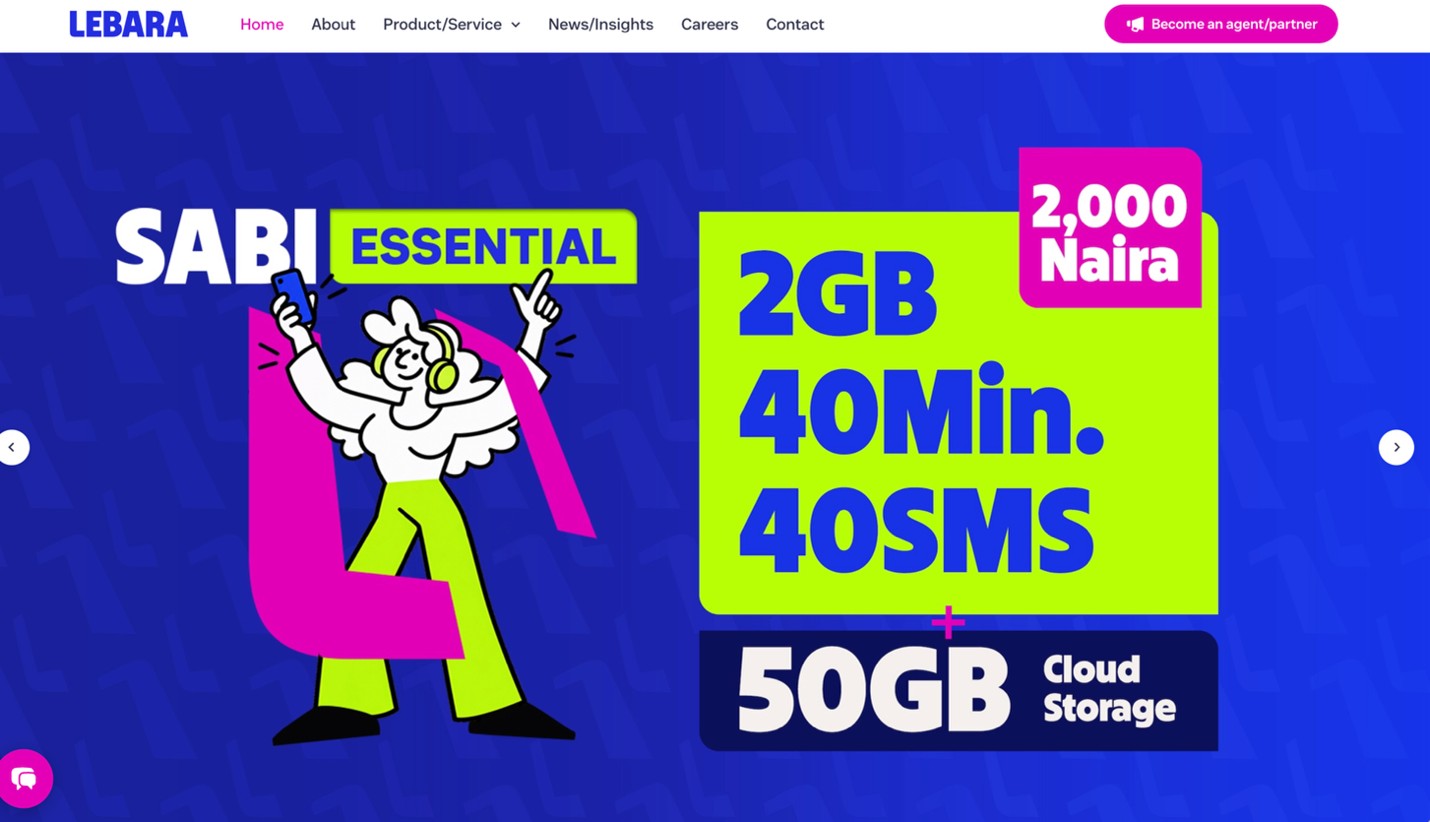
Lebara Nigeria is the newest launch in this article – it went live nationwide on 14 September 2026 – so it's too early to judge the results. But the launch playbook is worth studying now, because it shows a global brand rebuilding its model for a very different market rather than copy-pasting Europe.
- Soft launch first, commercial launch second – Lebara held a private stakeholder soft launch in Lagos in March 2026, alongside the UK Department for Business and Trade and the British High Commission, six months before it opened to customers. In a market where 46 MVNO licences have been issued since 2023 but only a handful have launched, credibility with the regulator, the host network and partners is a growth lever in itself. Announcing a target publicly – one million subscribers in year one – also sets the story you'll be measured against, so choose it carefully.
- Remove the biggest friction in the journey – in Nigeria, SIM registration (KYC) normally means a trip to a service centre. Lebara lets customers complete KYC remotely in its MyLebara app and activate an eSIM, so the slowest, most painful step of switching becomes a few minutes on a phone. Ask yourself: what is the one step in your market that stops people switching? Your launch hack is probably there.
- Borrow someone else's shopfront – alongside its app, Lebara is selling SIMs through more than 1,000 registered retail agents including Slot, a well-known Nigerian electronics retailer. It's the same lesson as Lebara UK's corner shops: partner with a retailer your customer already trusts, rather than building your own stores.
- Sell more than minutes – Lebara Nigeria says it will layer in cloud storage, travel eSIMs, entertainment and business services. For an asset-light MVNO on Airtel's network, coverage can't be the point of difference – so the bundle has to be. Nigeria also receives large remittance flows from its diaspora, a natural bridge to Lebara's existing European customer base.
- Know your risks out loud – Lebara has limited control over coverage and outages because Airtel provides the network, and the industry is still pushing the regulator for clearer revenue-sharing rules. Every MVNO launch carries host-network risk; the smart ones design their proposition around it rather than pretending it isn't there.
Make the product the marketing
Circles.Life launched in Singapore in 2016 as the first new mobile brand in nearly two decades – with no stores, no contracts and a market that didn't understand what an MVNO was. It became the template for the 'digital telco', and much of its growth came from making the product itself something people talked about.
- Waitlist, then friends and family, then everyone – Circles ran a beta for friends and family of staff in early 2016, opened to the public waitlist on a first-registered, first-served basis at a May soft launch, and only went fully open on 28 June. Each stage created scarcity, tested the digital journey with forgiving users, and built a queue of people who'd already said yes. It reported more than 100,000 customers in its first year.
- Write the headline before the campaign – the marketing team's 'PR-first' rule was to brainstorm the media headline before anything else. That produced campaigns like 'SGMobile' in 2017 – a fake rival telco with its own Facebook page, TV spots and microsite, whose overpriced MRT ads were then 'vandalised' by influencer duo YouTiao666. In 2019 the unbranded '3DollarBaller' vending machine handed out S$50 notes for S$3 to promote unlimited data on demand for S$3, and 10% of subscribers tried the product within the month. The marketing head has said the team keeps stunts to under 20% of its time and money – it's a lever, not a strategy.
- Turn a market complaint into a movement, then answer it – the 2018 Effie-winning '20GB for $20' campaign first stirred up a public conversation about shrinking data allowances, then launched the answer. Circles reported sales jumped 950% within two months. They seeded the problem, then sold the solution.
- Let customers design the roadmap in public – with a fully digital stack, Circles could ship new plans and add-ons just by updating its app. Requests for more data, smaller SMS bundles and unlimited incoming calls became new products within months. Every launch was proof that the brand listened, which is its own marketing.
- Referral as an acquisition engine, not an afterthought – over 40% of Circles' transactions came from referrals, with bonus data and bill credit on both sides and a live counter in the app. Top referrers earned more than 100GB of free data. Pair this with the 'pay only once the joiner sticks' discipline from our loyalty article and you have a channel that funds itself.
- Pop-up stores without the store – roadshows with sales staff on tablets gave people the reassurance of a face-to-face chat, but every sign-up still went through the digital journey. You get the trust of retail without the lease.
- Measure the stunt – every out-of-home stunt carried a QR code, and the team tracked spikes in web traffic and direct sign-ups on launch days. Weird is fine; unmeasured is not. This is exactly where Marketing Mix Modelling earns its keep, separating the buzz from the conversions.
Weird and wonderful – the growth hacks that shouldn't have worked
Some of the most successful launches in telco broke rules that every board paper would have told them to keep. Here are three we keep coming back to.
- Let your customers run the business – giffgaff launched on O2's network in November 2009, but its community forums opened in August, three months before there was anything to buy. Members answered each other's support questions, recruited new members and pitched ideas, earning 'payback' points they could cash out, take as credit or donate to charity. At launch the brand told members plainly that it didn't have a big ad budget and needed them to make it famous. When the iPhone 4 arrived needing micro SIMs, members started trimming giffgaff SIMs themselves and posting them out – with the company's blessing. The model has paid out more than £10m in payback and was reported to deliver an NPS of 74. The hack: launch the community before the product, then pay your best advocates like staff.
- Give it away, then charge for membership – Reliance Jio is an MNO, not an MVNO, but its 2016 launch rewrote the playbooks: free voice and data from launch on 5 September, and a reported 100 million customers in 170 days – an average of nearly seven new customers every second. Two things made it work beyond 'free'. Aadhaar-based eKYC made sign-up almost instant, and when the free period ended, Jio offered existing users a paid 'Prime' membership for a one-off Rs 99 to keep their benefits. Most MVNOs can't afford free, but the structure - remove the sign-up friction, then convert a trial base into a founding membership - scales down.
- Start at zero - KDDI's online brand povo relaunched in September 2021 as povo2.0 with a ¥0 base plan and a menu of 'toppings' customers buy when they need them – data packs, unlimited calls, even DAZN sport passes. It turned the SIM into a free on-ramp and every purchase into an opt-in. It's especially powerful as a second-line or travel SIM, and a smart way to land customers who'll never sign a monthly plan. On launch day applications were so heavy the sign-up page struggled – a nice problem to have.
Tried and true: the basic levers
The stunts get the headlines, but every launch above also got the unglamorous basics right. Don't skip these in the excitement.
- A waitlist – 2degrees, Circles.Life and giffgaff all built demand before they had anything to sell. A pre-registration page costs almost nothing and gives you a day-one audience, a demand signal for your board and a reason for the press to write about you.
- Referral from day one – a simple two-sided reward (data or credit for both the referrer and the joiner) was behind more than 40% of Circles.Life's transactions. Build it into your launch, not your year-two roadmap, and hold the reward until the joiner has stuck.
- Distribution where your customer already is – corner shops for Lebara UK, Slot stores for Lebara Nigeria, roadshows for Circles. Digital-first doesn't have to mean digital-only.
- Fix the switching friction – number porting, KYC and SIM delivery are where launches quietly lose customers. Jio's eKYC and Lebara Nigeria's remote KYC and eSIM both attack exactly this.
- Measure from the first dollar – every channel, stunt and partnership needs a way to track what it actually delivered. If you can't tell which of your launch activities drove profitable customers rather than rotational churners, you'll double down on the wrong ones in year two. Our Spend Impact MMM was built for exactly this.
Conclusion
The common thread across all of these launches is focus. 2degrees picked one number. Lebara picked one community. Circles.Life picked one frustration. giffgaff picked one radical idea about who runs the business. None of them tried to be everything to everyone on day one.
The second thread is that the weird stuff worked because it was measured and backed by a sound proposition. A stunt can buy you a news cycle; only a product that lives up to the promise turns that attention into customers who stay. And that's where launch and loyalty meet – because the customers you win in your first year are the base you'll be valued on when you raise capital or exit. Acquire for volume and value, and you'll see it where we always tell you to look: in your CLV metrics!
You're welcome to get in touch with me for more information or to chat about your launch – we would be delighted to help you!

Last blogs from Tanya Hyams-Young
View all →-
October 5, 2026
Loyalty that earns its keep: Marketing plays for MVNOs and Telcos
Loyalty should be more than discounts and points. From recognition and weekly rituals to data gifting, referrals, gamification, and device upgrades, MVNOs and telcos can use…
-
June 1, 2026
The Velocity Dividend
In this second article of the “Data, AI, Velocity and Value” series, Tanya Hyams-Young explores how MVNOs and telecom brands can improve profitability by increasing decision-making…
-
May 11, 2026
Decision-making Velocity using AI
Decision-making velocity is becoming the defining competitive advantage for MVNOs and telecom brands in the AI era. In this article, Tanya Hyams-Young explores how slow decision…