
The launch nobody told us about
A few weeks ago one of our customers mentioned, almost in passing, that a new thin MVNO had gone live in the Netherlands.
We were talking about something else. It came up as an aside, though they were clearly proud of it. One of their resellers had put its own name on a mobile service. It ran on a platform our customer was already operating.
The slightly embarrassing part: we had not heard about the launch.
That turns out to be a good problem. Once the platform is in place, a provider does not need help with every new tenant. They configure the offer, onboard the brand and move on.
Build for one, launch for many.
What the Netherlands has that Pakistan does not
The Netherlands looks easy because somebody already did the hard part.
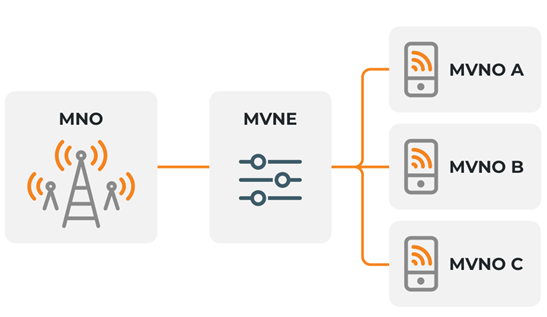
They negotiated the wholesale agreement. They connected the platform to the host network. They wired up number portability. Then they worked out how activation, provisioning, charging and billing talk to each other.
They got the first operator through the process, and that made the second one easier.
A mature MVNO market does not make the work smaller. It makes the work something you can buy, because someone has already done it once and turned the result into a service.
In a market with no established MVNE, the first entrant does not get that shortcut.
A licence gets you through the door
Nigeria issued 46 MVNO licences in 2023 and collected more than ₦8.6 billion in fees. By August 2025, two licensees were live.
The licence answers one question: are you allowed to operate? It does not give you an operating company.
One licence holder in another market put it to us plainly. He had no plans to launch in the short or medium term. Getting the licence, in his words, had been strategic. He would be in touch if that changed.
He is not unusual, and he is not doing anything wrong. A licence is cheap next to what comes after it.
After it, you still have to build or contract for host-network access, numbering and interconnect. Then identity verification, regulatory reporting, distribution, payments and customer support. Charging and billing sit in there too.
Depending on the model, you may also need your own APN. An integration fee usually comes with it, before anything moves at all.
Pakistan's window is open and the shelf is empty
In June 2026 the Pakistan Telecommunication Authority opened a new MVNO licensing regime.
A nationwide licence now costs USD 140,000 for 15 years. The rules allow four operating models: reseller, service provider, enhanced service provider and full MVNO.
What the market does not have yet matters just as much. There is no established neutral wholesale aggregator, and no mature local MVNE.
So the first licensees may each commission the same host-network integrations, the same platforms and the same operating processes. Separately, and at roughly the same time.
We watch this happen on projects already under way. One operator is working through a 170-page wholesale contract alone. It is the only document they have from the host. Nothing in it describes the technical interfaces, so the integration is being planned on guesswork.
It is not the first time. Teams put their effort into negotiating the deal, and none into the interfaces behind it.
A regulator can order a network to open. It cannot order an integration to finish.
Whether you launch as a light MVNO, a full MVNO or eventually a multi-operator MVNO, the problem is the same. Somebody has to build the missing service before anybody else can buy it.
Do the arithmetic before you pick a brand name
One operator told us they wanted to launch an MVNO and "be like T-Mobile".
That is a brand ambition. It is not yet a business model.
Not everyone arrives that way. Plenty come with a clear list. The APN setup, the activation and porting flow, the billing structure, the APIs they will automate against, and a date. Those are usually the ones who launch.
Either way the arithmetic is the same. Blended mobile ARPU in Pakistan is around a dollar. Out of that, a new brand covers its platform, its host integration, its operations and every subscriber it acquires. Meanwhile three host groups already hold national networks, distribution and marketing budgets.
The numbers change if you already have customers. A bank, a retailer, an insurer or an ISP can sell mobile into a relationship that already exists.
They change again if the platform carries more than one brand.
The enabler test
Launching an MVNO does not make you an MVNE.
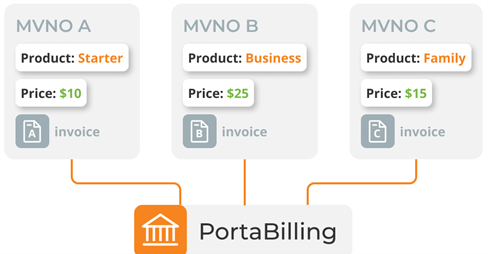
If your platform is built around one brand, one catalogue and one set of hard-coded processes, you have built a single-tenant MVNO. The technology might be capable of more. That is not the same as being able to sell it.
The real test is whether the next brand can be separated from the first.
An MVNE runs shared BSS and online charging underneath, while each MVNO on top manages its own product catalogue and customer base. So a second brand needs its own:
- products and prices
- customers and balances
- invoices and reporting
- users and permissions
- customer-facing identity
You also need wholesale billing between the levels, clear operational boundaries, and a repeatable way to bring the next tenant on board.
When that separation is missing the platform still works, but it stops being a product. We have seen where that ends. One enabler ran six brands on a billing system it had written itself, and had run out of patience maintaining it. What they wanted was to stop employing developers and get back to running the business.
Separation is what turns infrastructure built for one MVNO into something other MVNOs can buy.
Somebody who already made this decision
Daniel Tibor Fuchs, owner of Datora Telecom in Brazil, made this choice years ago.
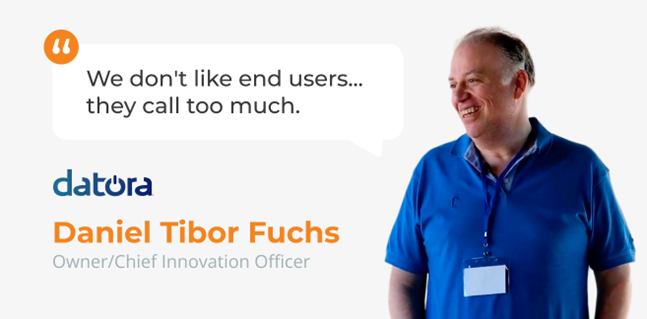
His explanation is short. "We don't like end users. It's not our thing, okay, they call too much."
So Datora became an aggregator instead. Fuchs says they now have 21 MVNOs under them and around three million subscribers. They outsource core networks for other MVNOs as well. They have been running it on the same billing platform for 17 years.
His own description of the business is close to a definition of an enabler. Datora runs "almost like a light MNO", he says: everything a mobile network has except the radio.
That does not mean every MVNO should copy Datora. It does mean the wholesale path is a real business, and a long-established one. Somebody who built it has a clear reason for preferring it.
Decide early who owns which part
Building an MVNE is not buying one product. It is assembling an operating model, and the hardest question is which supplier owns which part of it.
Expect to contract separately for the wholesale agreement, KYC, numbering and interconnect, distribution, payments and regulatory reporting. Expect somebody to own the programme management that holds those together, and assume that somebody is you unless a contract says otherwise.
Most vendors sell a component, not an outcome. That is worth establishing before scope is agreed rather than after, because the gaps between suppliers are where launch dates go.
The decision comes early
If you are looking at a licence in a market with no enabler, the question arrives sooner than most expect.
Are you building only what your own brand needs? Or are you building a route to market that other brands can use too?
The first gives you an MVNO. The second can give you an MVNE.
